

According to Singapore’s regulations, there is a higher risk of being restricted from entering the country if you enter and exit the country frequently.
For example, I have a friend (a “friend” in the middle of nothing) who was in this situation:
“In and out of Singapore at least3timesa year, andonce a month in2024, with a single stay of10to12days……”This is not a travel blogger’s punchline, but the real entry and exit record of a Chinese client before he was denied entry three times by the Singapore immigration authorities .
From the initial smooth entry to being rejected, to trying to apply for a self-employedEPwhich was approved but unable to collect the physical card, this friend’s experience reflects the misconceptions and blind spots that many people have about Singapore’s immigration policy.

I.3hidden dangersof frequent entry: have you stepped on the mine?
Many frequent travelers to Singapore do not realize that their travel patterns may have triggered Singapore‘sImmigration and Checkpoints Authority (ICA) risk assessment system.
According to the2025figures, Singaporedeniedentry toabout41,800foreign travelersin one year,nearly26%higher thanin all of2024. The increase in this number is not a coincidence, but a reflection of Singapore’s increasingly stringent border management.
Frequent entry and exit may in itself be seen as an unusual pattern of behavior. For example, the real-life experience of a father who accompanied a student is representative: he entered and exited Singapore10timesin one year, spending a total of nearly300daysin Singapore.
Although he entered the country visa-free and stayed legallyfor 30dayson each occasion, his frequent visits eventually triggeredthe ICA‘s manual vetting mechanism, and he was taken toa “small black room“for questioning.
Immigration officials have made it clear that their main concern is visitorsusing their tourist visas to work as illegal workers in Singapore. This concern is not an idle one, but a professional sensitivity based on a large number of actual cases.
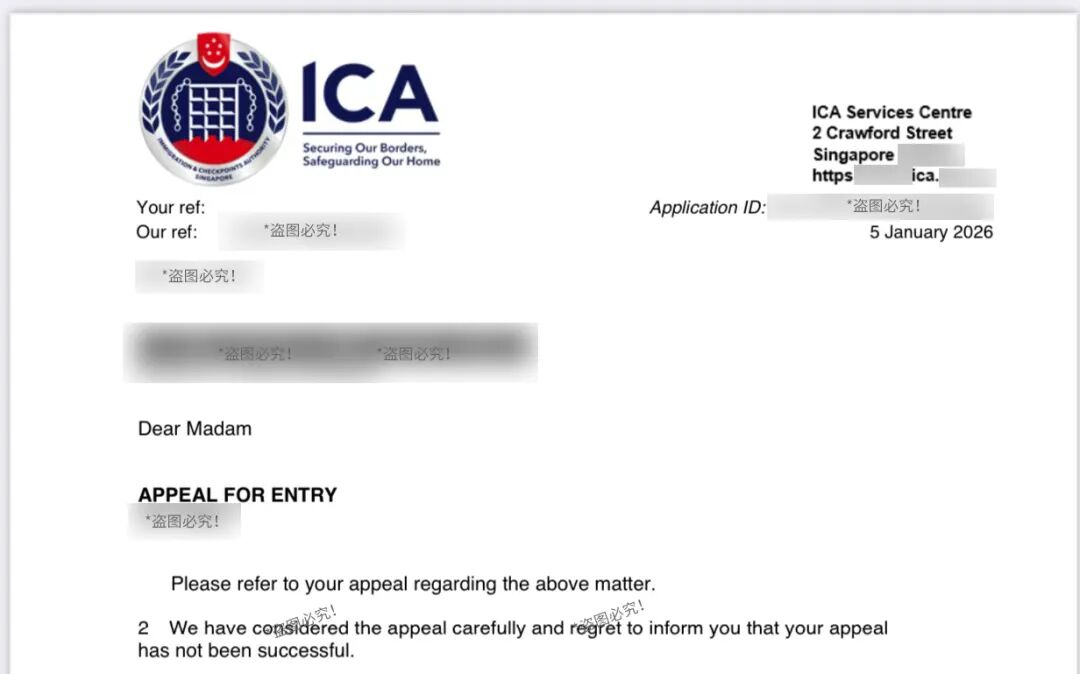
Photo/Screenshot of ICA Singapore email, stolen image!
Pitfall 1: Triggeringthe ICArisk system and entering the“watch list“
Automatic Flagging: The Singapore Immigration system records the frequency of entry and stay of each traveler.Patternssuch as the one in the case study“entering the country once a month for10-12days in2024“are automatically recognized as anomalies and flagged as high risk.
Data linkage: Singapore’s Ministry of Manpower (MOM) and the Immigration Department (ID) share data, and the system will cross-check and if there is a long term match between the immigration record and the lack of a formal work visa in Singapore, it will be directly determined as a“suspected illegal worker“.
Pitfall 2: Recognizedtendency to“work illegally“
Official judgment basis: frequent short-term stays, regular duration of each stay (e.g.,10-12days), and no long-term permit, which is a typicalpattern of“illegal employment“in the eyes of immigration officers.
Case in point: The article mentions that the father of the accompanying student entered the country10timesa year, stayed for nearly300days, and was eventually taken to a“small black room“for questioning. The immigration officer made it clear that the core risk of this model is the use of tourist visas to disguise work.
Pitfall 3: Leads to an outright ban on entry and even affects all future visas
Immediate consequences: After the first refusal, the personal data will carry a special marking and any subsequent attempts to enter the country may be automatically blocked by the system.
Long Term Impact: Once the bad record is entered into the database, it will not only make it difficult to enter the country for tourism purposes, but will also affect all future applications for Singapore visas (includingEP, Long Term Pass, etc.) as“attempting to circumvent immigration regulations“will become a negative record in the individual’s file.

Is it safe toget a self-employedEP? In-depth analysis of real cases
This client’s entry and exit records show a distinctive feature:at leastthreetimesa year starting in2021,becoming monthly in2024, with each staylasting 10-12days.
This patterncould easily be labeled as“suspected work rather than travel“in theICAsystem.
The first denial occurred onDecember30,2024, which may have been the result of automatic system flagging coupled with manual review. Normally, when the system detects an unusual entry/exit pattern, itautomatically triggers the further review process.
The client’s subsequent strategy was to apply for a self-employedEPandsubmit the application through an organization inMarch2025, which was eventually approved. However, the problem was that althoughthe EPapplication was approved, the client himself was unable to enter Singapore to collect his physical card and be fingerprinted.
InNovember2025, the clientwas denied entry for the second timewhen he planned to travel to Singapore to complete these formalities.By2026, a third attempt at entry still ended in failure.
The complexity of this case lies in the fact that the client’sEPapplication and entry permit are approved by different departments. Self-employedEPisapprovedby Singapore’s Ministry of Manpower (MOM) while Entry Permit isdecidedbyICA.Even ifthe EPapplication is successful, it does not necessarily mean that an entry permit will be granted.
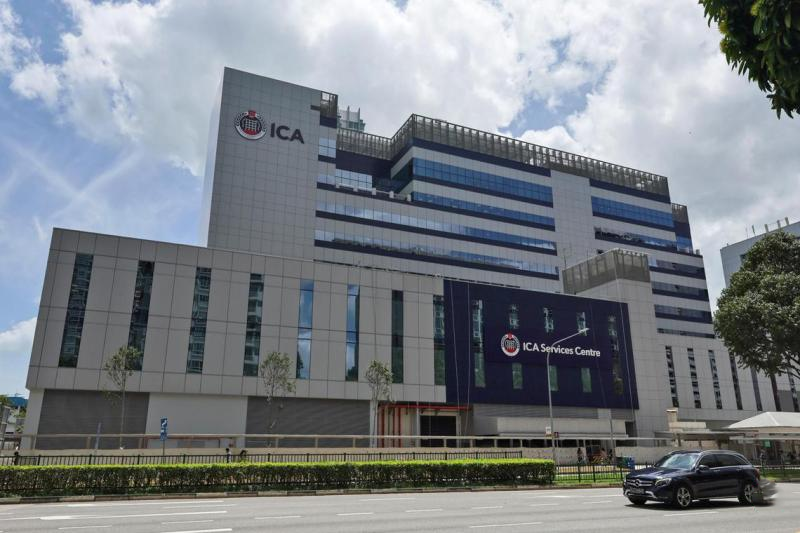
Schematic diagram, source: United Daily News

Threetrapsforself-employedEPapplications: paper approval is not the same as a passport
Self-employedEPis an option for many who wish to obtain Singapore residency through entrepreneurship. However,the policy has been significantly tightened for2025.
Pitfall 1: Misunderstandingof “self-employment“and lack of business authenticity
Registration ofa “shell company“for the sole purpose of obtaining a permit; no actual business, office address or local employees.
“Substantial operation“principle: real operation, business plan, fixed premises, financial records. Risks:Rejection of application, revocation of permit, impact on future visas.
Trap 2: Blind choice of industry, inconsistent with policy orientation
Choose saturated or low value-added traditional industries such as restaurants and retail.
ZFfavorsindustries that can create value such as technology innovation, finance, and internet. Risk: Difficulty in obtaining approval and renewal.
Pitfall 3:Inadequate planning forpersonal qualifications andCOMPASSpoints
Degree is not accredited; salary does not match individual experience or company size;40points ofCOMPASSattainmentnot planned.
Need to fulfill theCOMPASSscoring system: comprehensive assessment of salary, education, company diversity, proportion of local employees, etc. Risk:Failure of application due to insufficient points.
How to avoid the pitfalls: suggestions for key actions:
To avoid the above pitfalls, you need to plan pragmatically from the start:
1. Establishing real business roots
Business Plan: Prepare a thorough business plan with in-depth analysis of the market, financial projections and operational strategies.
Funding and Office: Ensure adequate funding (usuallyS$200,000 or more registered capitalis recommended) and a real office address.
Local contribution: actively consider hiring local staff, which demonstrates a contribution to the local economy.
2、Accurate matching of individual conditions
Self-assessment: Use the Ministry of Manpower‘s(MOM)Self-Assessment Tool (SAT)to estimateCOMPASSscoresbefore applying.
Salary Planning: Salary needs to meet boththe minimum threshold(S$5,600/monthfrom2025) andCOMPASSsalary scoringrequirements, and match with individual’s background and company’s business scale.
Verification of academic qualifications: ensure that the highest qualification can beaccreditedbythe MOM.
Schematic diagram, source: United Daily News

Can I re-enterSingaporewith a small country passport afterbeingrefused entrybyICA?
When a Chinese person is denied entry by Singapore due to frequent entry and exit, is it possible to bypass the restriction by obtaining a passport from a smaller country? This is a complex issue.
Indeed, passport holders from a number of countries have visa-free access to Singapore. For example, ordinary passport holders from countries such as Georgia, Armenia, Azerbaijan, etc. have visa-free access to Singapore.
However, this does not mean that once you change your passport, your previous bad record will be erased.
ICA‘s screening system includes data analysis and risk assessment features that are capable of recognizing multiple identity associations. If the system detects frequent attempts to enter the country by the same person using different passports, the behavior itself may be considered a high-risk signal.
More importantly, fromJanuary30,2026, Singapore will implementtheNo-Boarding Directive(NBD).This means thattravelers who do not meet the entry requirements may be prevented from boarding their flights at the point of departure, without having to arrive in Singapore at all. This new system makes border control stricter and more efficient.
Schematic diagram, source: United Daily News

V. New Trends in Singapore’s Immigration Policy: Smarter, More Upfront Interception
Singapore’s immigration policy is becomingfaster, smarter and more front-loaded.In a nutshell:Singapore is using technology to stop risks at its gates, even before the plane takes off.
This may mean greater convenience for the average traveler, but for those with bad records or potential risks, it means that the path to entry has been completely tightened.
Trend 1: Risk interception is highly front-loaded, “no-loading orders“(NBD)
This isthe most central new change for2026.FromJanuary30,2026, the Immigration and Checkpoints Authority of Singapore (ICA) will officially implementtheNo-Boarding Directive(NBD).
1. How it works: Previously, travelers were screened and denied entry at Customs after flying into Singapore. Now,ICAis able to screen travelers’ information (e.g., entry cards, flight manifests) submitted by airlines prior to flight departure. Once apersonis recognized by the system as“prohibited“or“undesirable“,ICAwill issue directives to the airline.
2. Immediate consequences: These travelers willnot be able to check in at their point of departure, will not be able to board their flights to Singapore, and will no longer have the opportunity to reach customs.
3. Strict penalties: airlines facefines ofup toS$10,000for non-compliance; those responsible may even face imprisonment. This makes interdiction very efficient.
4. People affected:ICAfocuses on three categories of people: those who have committed crimes and been barred from entering the country, those who are a threat to public safety, and those who are at risk of immigration violations (e.g., may be working illegally or overstaying).Those who frequently enter or leave the country and have a record of being denied entry are highly likely to be included in this list.
Trend 2: Full automation and digitization of processes
To cope with the continued growth in clearance traffic (up about17%compared to2015), Singapore is relying massively on technology to improve efficiency.
1. Passport-free customs clearance: Singapore has been the first country in the world to implement passport-free customs clearance on a large scale. At major checkpoints, Singapore residents and travelers can befast-trackedthrough scanningtheir faces and irises.
2. e-Arrival Card (SGAC): All foreign travelers are required tosubmit an e-Arrival Card (health declaration is integrated) online no later than3daysprior to arrival in New Zealand.This is essential for entry into the country and is animportant source of data forICAto obtain traveler information in advance and conduct risk assessment.
3. Automated in-vehicle customs clearance: It is expected that bythe end of2026, an automated in-vehicle customs clearance system will be implemented at the Daishi land border crossing, so that travelers will be able to complete the formalities in the vehicle without having to get off the vehicle.
Trend 3:Stricter scrutinyof work-based permits (e.g.EP)
Although this is not directly an“immigration“policy, it is closely related, as it affects a large proportion of long-term entrants.
The Singapore Government’s overall orientation is toprioritize local employment and attract genuine top talent.As a result,the threshold for approving work passes such as EPs is being raised, and the scrutiny is more focused onthe applicant’s actual qualifications, the real operations of the company and its contribution to the local economy.
This means that itwill be increasingly difficult to obtain approval or renewal of aself-employedEPsimply by“packaging” itwithout a substantial business.
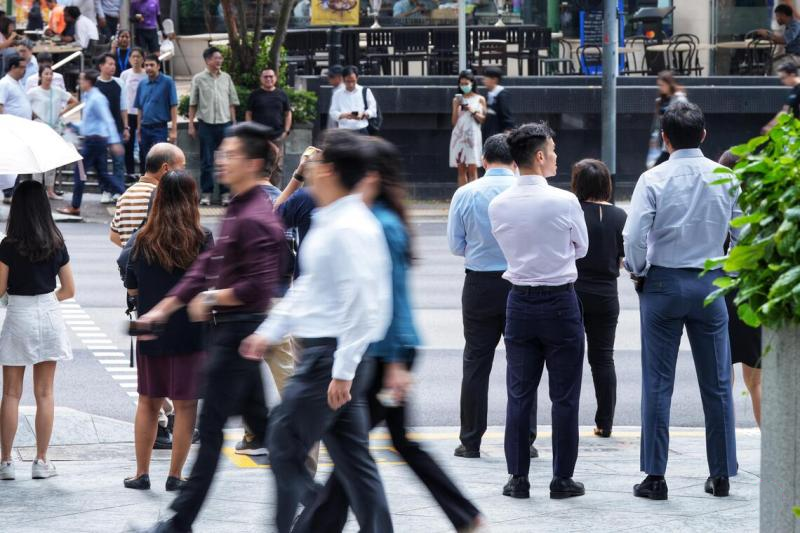
Schematic diagram, source: United Daily News

VI.4Practical Suggestionsfor Frequent Immigrants
For those who need to travel to and from Singapore frequently, there are the following practical tips to minimize the risk:
Firstly, if you really need to stay in Singapore for a long period of time, it is better to apply for the appropriate long-term pass rather than relying on short-term visas for frequent entry and exit.
Assuggested byICAofficials,“It would be better toapply for aLong term stay passif you are going to stay in Singapore for a long period of time“.
Secondly, ensure that each entry has a clear and reasonable purpose and itinerary.Visa-free entry does not mean that one can engage in any activity. If one enters the country as a tourist but carries out paid work, it may be considered illegal work.
Third, remain honest and consistent. When entering the country, provide clear and truthful answers and avoid inconsistent statements. If questioned, cooperate with immigration officials by providing necessary supporting documents.
Fourth, understand the requirements and restrictions of different passes. For example, self-employedEPholders need to be aware of the renewal requirements, includingthe actual period of residence in Singapore. A prolonged absence from Singapore may affect the renewal of the pass.
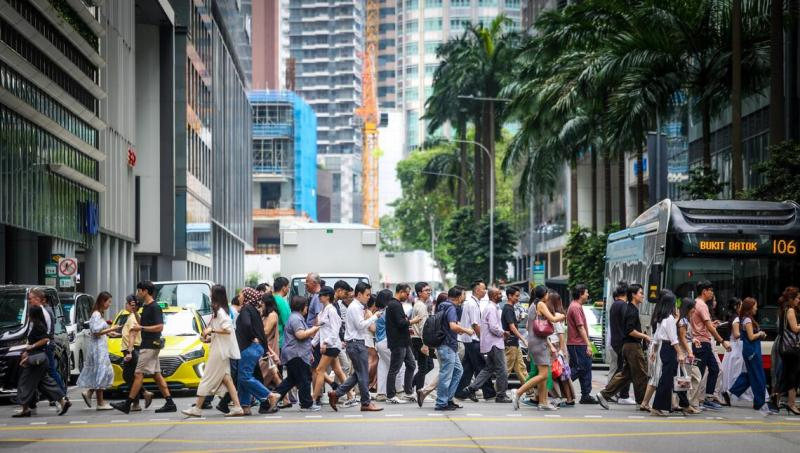
Schematic diagram, source: United Daily News
[Conclusion]
Each person’s passport page bears his or her nationality, but what is displayed on the immigration officer’s screen are strings of analyzed behavioral data and risk-assessment scores.They calmly calculate the likelihood of each traveler, and emotions and explanations, pale so much in the face of these numbers.
*Source:ICASingapore,MOM,SPF, Lianhe Zaobao, synthesized customer oral collation, reproduced must indicate the source, infringement and deletion of contact.
……
👇 Plus V enters Singapore’s largest outbound community 👇

Past Recommendations