

Saudi Arabia’sVision2030is reshaping its business ecosystem like never before, creating an efficient, transparent and cost-effective entry environment for global investors through continuous legal amendments and digital governance.
One of the key initiatives is thesuspension ofthe investment license fee,which wasSAR12,000, which directly reduces the initial set-up costs for businesses. For enterprises planning to enter the Middle East market, now is the golden window to take advantage of the new policy dividend and quickly layout at a lower cost.
How to register a company in Saudi Arabia and how to then realize cost reduction and efficiency in the company?

Zero License Fee Sailing: A Complete Strategy for Cost Reduction and Efficiency in Saudi Company Registration
Choosing the right business entity in Saudi Arabia is the first step to success.
The Saudi Commercial Companies Law provides a variety of forms, of which the followingthreeare the most common, and all of them support the participation of foreign investors, who can choose according to the scale of their business, willingness to bear risks and development plans.
1. Limited liability company
A limited liability company can be established by one or more natural or legal shareholders. Its core advantage lies in the fact that the liability of shareholdersis limited to the amount of their capital contribution, which realizes a clear separation of corporate assets and shareholders’ personal property and a significant risk isolation effect.
This form has a flexible structure and is preferred by the majority of foreign investors engaged in trading, services, consultancy and small to medium sized production projects. The ZF service fee for setting up on the platform of the Official Saudi Business Center is SAR 1 ,200.
2. Joint Venture Company
A joint venture company is established by two or more partners (natural or legal persons).
Unlike a limited liability company, a partner in a joint ventureis not only responsible for the capital he or she has invested, but is also unlimitedly jointly and severally liable for all of the company’s debts and obligations, and each partner is legally considered an independent businessman.
As a result, this form is usually reserved for specific cooperation projects where there is a high level of trust between the partners and a willingness to share full responsibility. Its official set-up service fee is relatively low atSAR 800.
3. Joint-stock companies
A joint-stock company divides the capital of the company into equal, freely transferable shares and may be created by one or more natural or legal persons. The liability of the shareholdersis limited to the value of the shares they hold.
This form is suitable for large corporations that have large-scale financing needs, plan to attract a large number of investors or seek a public listing in the future. Due to its more complex structure, the official set-up service fee is also higher at SAR 1 ,600.
Decision-making recommendations:
When comparing forms of liability, operational flexibility and set-up costs,the limited liability company is the most common and recommended option forthe vast majority of foreign investors seeking controlled risk and efficient market entrydue to its limited liability, ease of set-up and mature structure.
If you would like me toadaptthe subsequentsection“Efficient Customs Clearance: The One-Stop Online Registration Process“to a similar paragraph break, I can continue to do so for you.

Schematic diagram, source:pexels

One-stop digital customs clearance:20days to complete the establishment of a Saudi company and tax filing
Saudi Arabia has made the company formation process fully online, with the core being aone-stop applicationthrough the“Saudi Business Center“platformat (accessible on the national unified portalGOV.SA). The standard process for registering a limited liability company, for example, is as follows:
Phase I: Pre-preparation (approximately1-2weeks)
1. Determine the name and business: Prepare3-5alternative Arabic company names and define the scope of business activities. Under thenew Business Names Law, which came into effect in April2025, companies can now reserve and register names in English.
2. Preparation of basic documents: including shareholders’ passports, draft articles of incorporation, authorization documents for the proposed manager, and so on. Certified translations are required for all non-Arabic documents.
Stage 2: Online submission and linked registration (approx.2-4weeks)
This is the most central stage, where your single application triggers simultaneous registrations in multiple ZF departments.
1、Submit the application for establishment: log in the platform of Saudi Business Center, select the corresponding service, fill in the online form and upload the documents, and pay the ZF service fee.
2.“One-click“completion of seven key registrations: after the application is approved, the system will automatically process them for you:
Issuance ofa Business Registration Certificate: the legal“birth certificate“of a company. According to the new Business Registration Law, this registration is valid throughout the country, has no expiration date, and only needs to be confirmed annually, which greatly simplifies the procedures for doing business across borders.
Establishment of corporate recordsin the Ministry of Human Resources and Social Development.
Completetax registrationwith the Zakat, Tax and Customs Administration (ZATCA)and obtain a Tax Identification Number (TIN).
Registeredwith the General Directorate of Social Security (GOSI).
Registera country addresswith Saudi Post.
Complete registrationwith your localChamber of Commerce.
Stage 3: Bank account opening and address realization
Open a company account in a local Saudi bank with the Business Registration Certificate and other documents. The new law requires the corporate account to be tied to the business registration.
Also, companies are required to provide averified state addressto meet municipal licensing requirements, and startups may consider using a compliant virtual office solution.
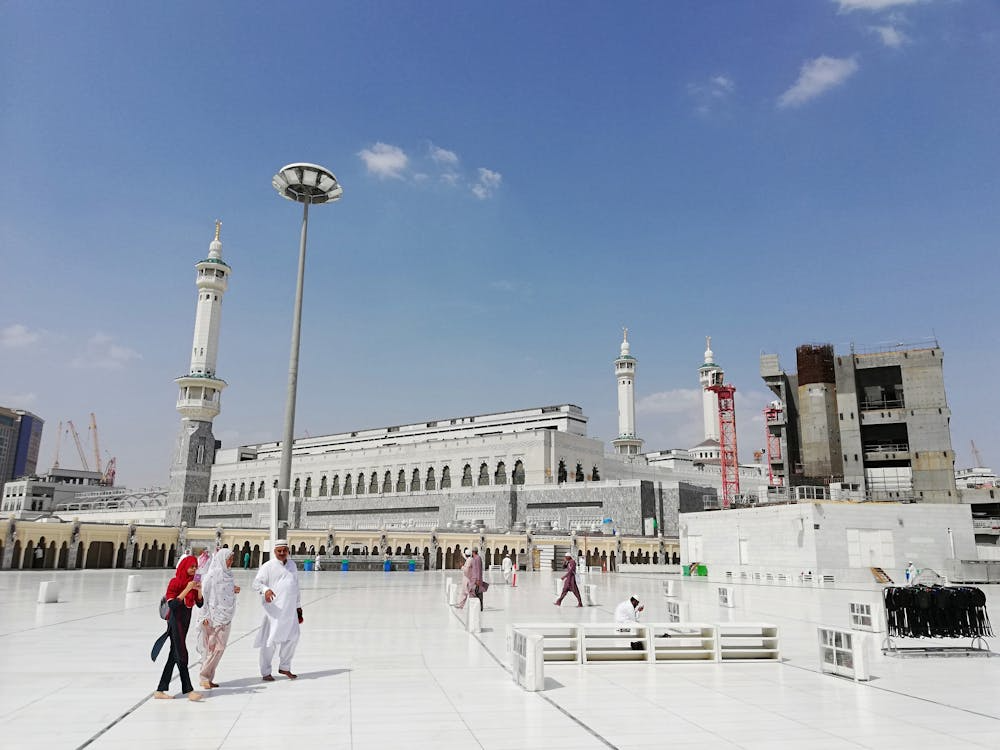
Schematic diagram, source:pexels

A guide to avoiding the pitfalls: realizing pure foreign ownership and tax compliance in Saudi Arabia
Tax compliance has been the lifeblood of the operation since the company’s inception. All tax matters aremanaged centrallybythe Zakat, Tax and Customs Administration (ZATCA).
1. Core taxes and rates
Corporate Income Tax: The standard rate is20%for resident companies and non-resident enterprises with a permanent establishment in Saudi Arabia.Financial statements are required to be audited by a locally practiced accountantfor annual revenues in excess ofSAR1million.
VAT: The standard rate is15%.Businessesare required to register for VATiftheir taxable sales exceedSAR375,000for the past12months orprojectedfor the next12 months.
Zakat: This is an Islamic religious tax levied on the interests of shareholders of Saudi and GCC nationalities in Saudi resident entities at a rate of2.5%(Hijri) or2.578%(GC). Foreign companies are usually not involved.
2. Important tax incentives
Saudi Arabia offers competitive incentives to attract specific investments:
Regional Headquarters Scheme: Multinational enterprises with regional headquarters in Saudi Arabia are entitled toconcessionsfora period of30yearsin respect of their qualifying activities, includingan income tax rate of0%on qualifying incomeand0%withholding taxon payments of dividends, service charges, etc., made outside the country.
Special Economic Zone Incentives: Companies investing in special economic zones such as King Abdullah Economic City and Cloud Computing are eligible for a number of benefits including income tax exemptions and customs duty concessions.
3. Mandatory electronic invoicing system
Saudi Arabia has made theelectronic invoice (FATOORAH) systemmandatory.AllB2Btransactions must beelectronically invoiced with an encrypted QR code and uploaded in real timethrougha ZATCA-certified system.
This is the focus of the tax audit and it is imperative that system interfacing and testing is completed before business begins.

Schematic diagram, source:pexels

Fourth, manpower compliance, low-cost rapid development of the Saudi market complete landing path
1. Social security registration
As soon as a company is established and hires employees (including expatriates), it must immediatelyregister the employeeswith the General Social Security Institute (GOSI) and pay social security contributions, the cost of which is mainly borne by the employer.
2. The policy of “Saudization”
Businesses are required to meet the minimum percentage of Saudi employees to be employed as stipulated by their industry and size. However, it is worth noting thatbusinesses thatare grantedaRegional Headquarters (RHQ) license can enjoya Saudization exemptionfor up to10years, which is one of its key advantages.
3. Annual compliance
Companies are required to file tax returns on time (e.g. VAT is usually filed on a quarterly basis), reconfirm the business register annually and submit financial statements.

Schematic diagram, source:pexels

V. Final action checklist for investors
1. Verification of official information
The ultimate basis for all decisions should bereal-time information from theSaudiZFportal (GOV.SA) andthe officialZATCAwebsite.
2. Engagement of local consultants
It is highly recommended to engage a local Saudi licensed legal and fiscal advisor. They can assist with Arabic documentation, tax optimization and ZF communications, which is a key investment for risk avoidance and efficiency.
3. Prioritize the processing of electronic invoices
Ensure that the financial system issuccessfully interfacedwiththe ZATCAe-invoicing platformbefore any business is conducted.
4. Planning the long-term structure
If the business qualifies, actively evaluate applying for“regional headquarters“status or locating in a special economic zone to maximize the use of tax incentives.

Schematic diagram, source:pexels
In short, the core of successful landing in Saudi Arabia can be summarized as follows:
We utilize digital platforms to achieve efficient establishment, understand tax rules to build a solid foundation for compliance, and use professional services toavoid potential risks.
By keeping pace with its reforms, the company will not only be able to open its Saudi business smoothly, but also lay a solid foundation for its long-term development in the entire Middle East region.
*Reference sources: Saudi Business Center, General Administration of Taxes and Customs,GOV.SA,MOC,SMOI, the new Business Registration Law, compiled from comprehensive news reports, reproduced with attribution, infringement and deletion of contact.
…
👇 Plus V enters Singapore’s largest outbound community 👇