

In Singapore, primary and secondary school tuition centers are not a“register a company and go into business“industry. Unlike many countries, Singapore adoptsa pre-approval + continuous supervisionmodelfor education businesses, especially when it comes to the teaching of minors, which isdirectly supervisedby the Ministry of Education (MOE).
Many entrepreneurs have stepped into the same pit in practice: the company has been registered, the site has been rented, but because ofthe Ministry of Education license, the use of the site or the lack of fire safety documents, the delay in opening, or even asked to suspend classes to rectify the situation.

I. Why do tuition centers in Singapore need a license?
As a global education hub, Singapore has a strong market for tuition and extra-curricular training. According to the latest statistics, more than800 tuition and education service providers (including tuition centers for English, Mathematics, Science, etc.) are active inSingapore.
However, unlike many countries, regulation of academic tuition centers in Singapore is clear and stringent: when a tuition center enrollsmore than10students, it is considered a private educational institution and must registerwith the Singapore MinistryofEducation (MOE) and comply with a range of regulatory requirements. Failure to register can result in fines, suspension and even criminal penalties.
Therefore, for those who want to start a tuition center in Singapore, it is not enough to understand the market opportunity, but you must be prepared for the legal compliance of company registration and license approval.

Schematic diagram, source: United Daily News

II. What kind of license does a tuition center need in Singapore?
1 Basic Requirements forMinistry of Education (MOE) Licenses
Under theEducation Act, if your tuition center offers academic courses for10or more students, it must register as a private schoolandapply for aCertificate of Registration of School fromthe MOE .“.
2、What belongs to a tutoring center that needs to be registered?
Remedial centers that teach core elementary and middle school subjects (e.g., math, science, English, etc.);
Provides enrichment or improvement instruction to help students improve their performance;
The number of students is usually constant throughout the program ≥ 10;
The tutors and courses should also be registered together. Registration is not only the name of the organization, but also the information about each course you offer, and the teachers involved.
Note:Individual teachers whoare purely private, one-to-one tutors, who do not have a permanent classroom and who often have fewer than10students, are not automatically part of a tuition center that needs to be registered. However, once you start enrollingmore than10students in a permanent classroom, then the MOE registration requirementsapply.

Schematic diagram, source: United Daily News

III. From company registration to license application, complete steps
There are roughly two main stages to the whole process:
1. Stage 1:Registering a companywith ACRA
The main business that operates the tuition center must first be registeredwith the Accountingand Corporate Regulatory Authority (ACRA) ofSingapore. The available business forms include:
Private Limited Company (Pte. Ltd.): Most common;
Sole Proprietorship: self-employed;
Limited Liability Partnership (LLP).
However, for formal tuition centers it is recommended to give preference to Pte. Ltd.because of its advantages such as independent legal personality and limited liability of shareholders.
Registration Steps (ACRA / BizFile+ Online):
Select the company name andrequest approval of the nameon the ACRA systemBizFile+ (about1-2working days).
Complete the information on paid-up capital, registered director (at least one Singapore resident or person with a work pass) and registered address.
Submit the registration application and KYC materials and pay the registration fee (approximately SG$315).
Obtain a Certificate of Incorporationand a Unique Entity Number (UEN).
Hands-on Tip:
The company’s registered address must be a physical business address (no P.O. Boxes).
Start-ups can obtain a registered address and local director services through an agent.
Shareholders and directors of the company are required to prepare passports, proof of address and other documents at the time of submission.
After registering the company, the next step is to do further applications for licenses or permits.
2. Stage 2: Application for Tutorial Center License
After completing your company registration, you will need to go through the online license application process on theGoBusinessplatform:
Step 1: Set upGoBusiness / CorpPass account
GO BUSINESS is the Singapore government’s unified platform for business permit and license applications. You need:
Sign inwith your company CorpPassaccount (not your personal SingPass).
Select “Apply Licence” in the application menu → select the government agency as “Ministry of Education”.
Step 2: Submit an application for enrollment in a tutorial center
The completed application form includes:
Name of the tutoring center (to clearly reflect that it is an educational center).
CompanyUENwith basic company information (fromACRA).
List of courses (each course needs to indicate what it teaches and the target age group).
Teacher information (including education, work experience, etc.).
Proof of site use (see below).
Once the application is submitted,the MOE review is usually completed within a few business weeks, but may be extended if information is incomplete.
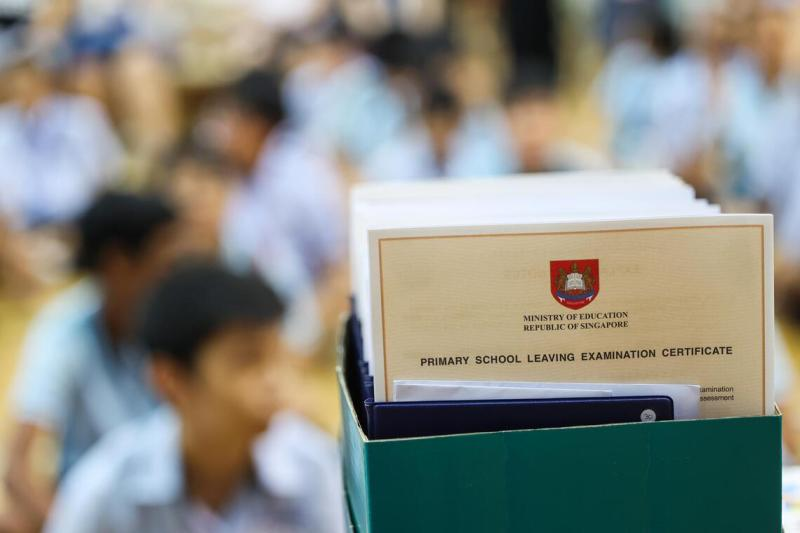
Schematic diagram, source: United Daily News

IV. Key qualifications and documentation requirements for the application process
Approval of a tutoring center is more than just a simple form to fill out and submit; it involves a number of key documents and compliance requirements:
1. Site program and safety standards
The physical location of the tutoring center must comply with a number of regulations:
Floor Plan:An official floor plan approvedbythe SCDF Fire Safety Department, clearly indicating the use of the site fortutorial/school purposes.
FireSafety Certificate (FSC): ensures that the site complies with fire safety standards.
Site Use Approval (URA / HDB): If the site is a commercial office or retail unit,commercial use approvalshould be obtainedfrom theUrban Renewal Authority (URA) or theHDB.
2. Teacher qualification and background check
Teachers in tuition centers must register and declare whether they have a criminal record (including sexual assault or violent crimes) bycompleting the relevant declaration format the MOE . The MOE will not register teachers with a serious criminal record.
Teachers need to be prepared:
Proof of academic qualifications (university or equivalent);
Description of teaching experience with resume;
Background record or certification (statement of no criminal record).
3. Number of students and curriculum setting requirements
Officially, centersfall into the category of educational institutions that must be registeredonly if they offerinstruction to ≥10 students.
The remedial program itself needs to be specified in the application, including:
Course Title;
Grade Level;
Textbook reference;
Instructional Objectives.
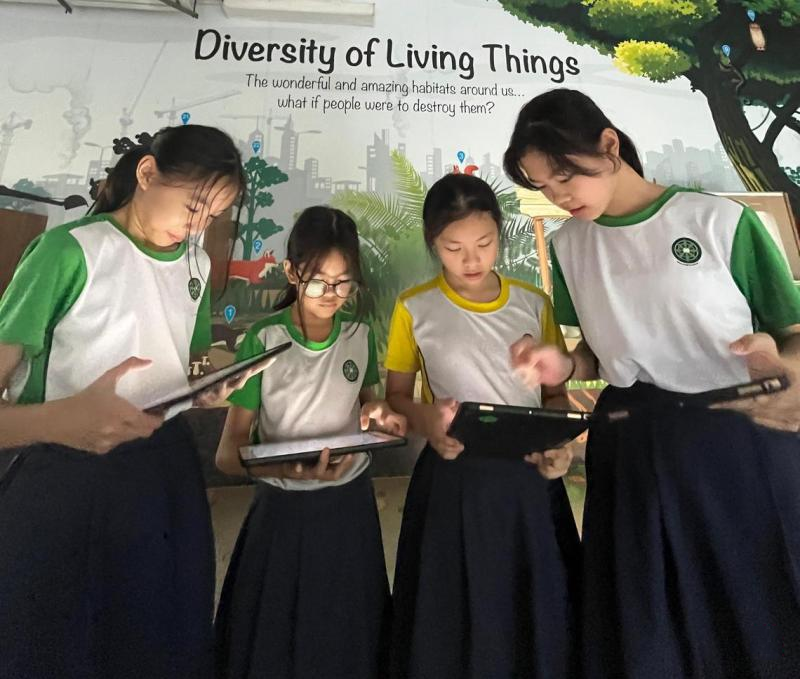
Schematic diagram, source: United Daily News

V. Compliance considerations during the operation of tuition centers
Just getting a license does not mean you can “rest on your laurels“. Here are important aspects of the business process that require special attention:
1.Core compliance matters
Continuously updateMOEregistration information: If you add a new course or hire a new instructor, you need toapply for a change in registrationonthe GoBusiness platform.
Security and Privacy Protection: Under Singapore’s Personal Data Protection Act (PDPA), tuition centers are required to protect the personal information of students, parents and staff. Unauthorized collection, use, retention and transfer of personal information is illegal.
Fire and site safety review: regular site safety checks to ensure fire facilities, evacuation routes, lighting, etc. meet requirements.
2. Financial, Tax and Employment Compliance
Tax Registration (IRAS):New companies are required toregisterwith the Inland Revenue Authority of Singapore (IRAS) for Corporate Income Taxupon incorporationand to consider whether to register as aGSTtaxable personbased on revenue.
Employment and CPF contributions:If you employ local or expatriate staff, you will need to make CPFand CPFcontributions according to your work permit and salary scale, as wellas handle work visa matters.
3. Legal marketing and advertising norms
Advertising of tuition centers is also subject to regulatory requirements:
Do not exaggerate teaching results or use inaccurate comparative data;
Comply with advertising ethics and fair competition regulations;
not distribute leaflets or posters on school premises without permission.
4、Common Misconceptions and Risk Tips
Myth 1: Tutorial centers do not need to register for a license
Incorrect.As long as there are10or more people tutoring and teaching, you have to register or it’s illegal.
Myth 2: A company can operate directly after registration
Incorrect. Incorporation is only company formation, the main operation of the tuition center requiresa certificate of school registration approved by the MOE .
Risk 1: Delays due to errors and omissions in registration information
License applications that do not clearly state program documents, teacher background, or missing site certificates can result in delays in approval or return for corrections, which can affect the opening of the business. It is recommended to prepare all the documents in advance.
Risk 2: Unauthorized enrolment or teaching
If a tutorial center is found to have failed to enroll students in accordance with the licensing requirements, to have expanded its scale, or to have published inaccurate advertisements, it may be fined or even have its business license revoked.

Schematic diagram, source: United Daily News
[Conclusion]
In Singapore, tuition centers are a“slow start, long cycle“business.
There is no shortage of demand for tuition in Singapore, but it has never been a“quick in, quick out“market.
Compliance, the lowest and most important threshold here.
If you intend to: open an elementary or secondary school tutoring center; cater to local or new immigrant families; make a long-term, replicable education business.
It is far more important, then, toget it right once than to remedy it after the fact,from company registration, license application, venue selection to teacher placement.
*Reference sources: SingaporeMOE,ACRA,IRAS,URA,HDB,FSC,SCDF, Lianhe Zaobao, comprehensive news reports collated, reproduced with attribution, infringement and deletion of contact.
…
👇 Plus V enters Singapore’s largest outbound community 👇

Past Recommendations